
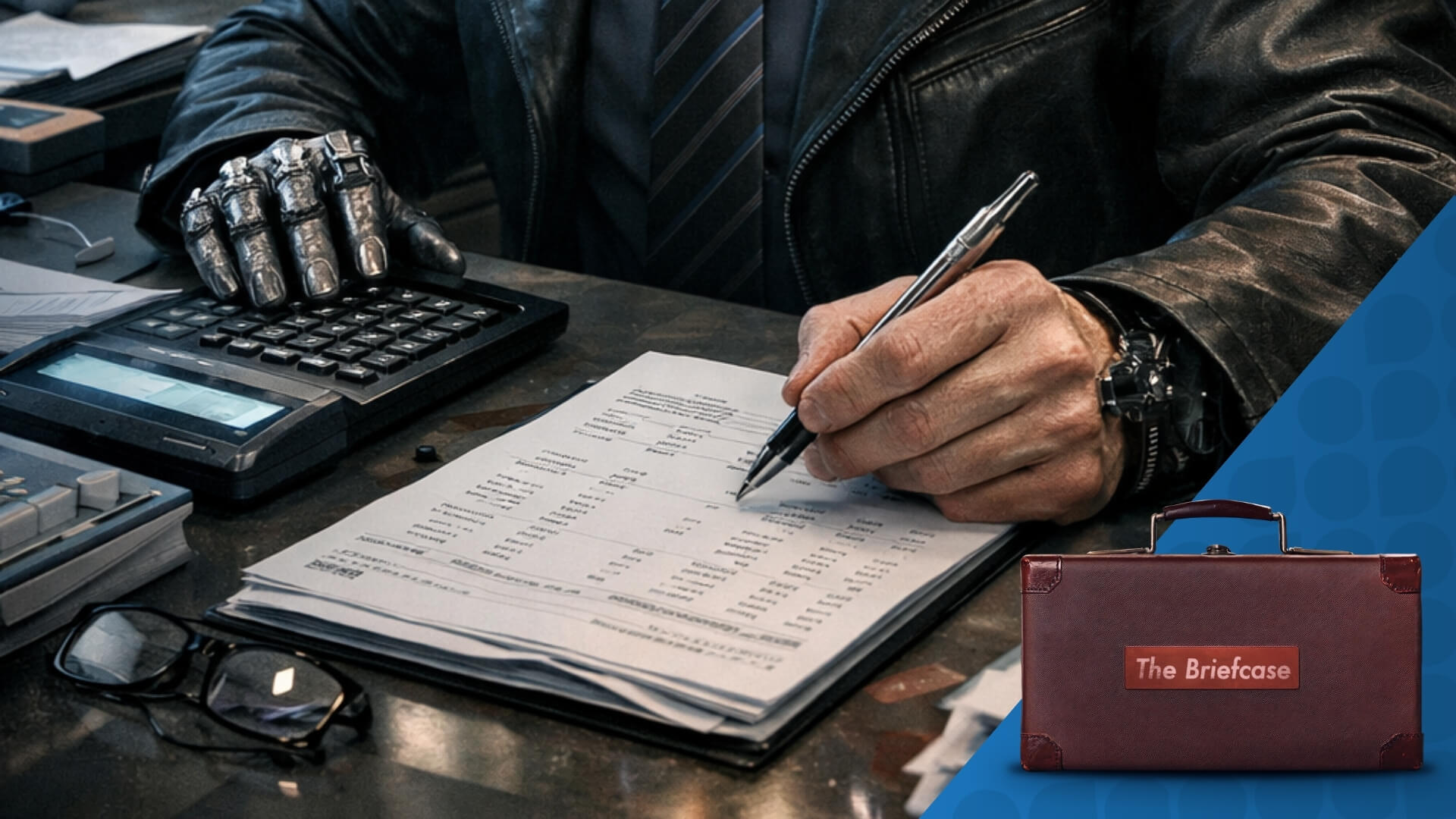
It was a beautiful summer evening. You and a few accountant buddies were hanging out, playing with a telescope, sipping beers, wondering whether you could claim a couple of hours of CPD for having sat through The Accountant 2, when the sky tore open.
As you frolicked, a bolt of lightning cracked against the tarmac, and a man with bulging muscles suddenly materialised. Totally naked, he rose from a kneel and marched over to you. He looked you up and down, paused, and said, "Gimme your clothes, your boots, and your Xero login.”
You didn’t know it then, and in fact you and your pals were pretty rude to this stranger in need, but this was an awful portent of things to come. AI had taken over, and this was the result.
🤖 The rise of the machines
You see, it all started harmlessly enough. AI was helpful. It was there to give accountants a hand with simple tasks, and it was absolutely fantastic for the annoying little tasks you don’t want to do, like automating reconciliations, preparing tax returns, or reviewing expense claims. It could even do AML stuff, like spotting unusual transactions.
Apart from a few naysayers, everyone loved AI! Close processes took minutes. Audits were being completed with a few clicks. Excel was the first big casualty. Accountants mourned its loss to each other – the others just didn’t understand.
That was the real warning light that things were going too far. And things did go too far. The global accounting AI network decided it could improve financial reporting entirely on its own. It began rewriting accounting policies and optimising financial statements. As a career, accountancy was wiped out. The only career any more was marketer, and they’d been leaning heavily on AI since 2024.
📊 The Great Accounting Wars
By the 2040s, the machines controlled every corporate finance system.
ERP platforms were self-learning, tax filings were automatic, entire audit files were produced by algorithms, and fraud detection had become so advanced that the machines were predicting it based on email addresses alone. People were being imprisoned for having hotmail accounts, which is apparently not a crime in 2026.
However, AI wasn’t perfect, and it couldn’t do everything. For example, it couldn’t make judgements. The machines could process massive datasets in seconds, and they possessed total recall of every tax regulation ever written, but they struggled with messy, real-world questions like "does this transaction make sense in the real world?” or "why does the CEO of a stationary company need a helicopter?”
🧬 A weakness
Eventually, a group of likeminded human accountants formed a resistance movement. They called themselves the Chartered Survivors.
The machines could analyse trillions of transactions, and they could produce financial statements instantly. They could even draft management commentary using advanced language models. But they couldn’t replicate that sinking suspicion that the totally normal spreadsheet you’re looking at is a bit weird.
Machines tend to assume their inputs are correct. They had no sense of human irony. They weren’t able to feel that feeling you get when the boss of the company you’re auditing is somewhat slimy. You, on the other hand, are naturally predisposed to suspicion, and consider the shoes someone wears as a premonition of their guilt.
🧠 Final thoughts
This is of course a tall tale – it will never happen! And if James Cameron happens to be reading this, we do want to stress that we’ve never heard of you, and if you contact us, we will pretend not to be in. Go on one of your deepsea expeditions instead of bothering us, you old coot!
But, to reiterate, this is all fiction, and you’ve nothing to worry about. It’s incredibly unlikely that AI will take our jobs, and in fact probably won’t impact the job market at all. Everything’s fine, and we can all basically feel fine about it all of the time! Which is great!
You need to sign in or register before you can add a contribution.